

A complicated U.S. economy. Stubborn inflation and a jobless boom. Unprecedented conflict with the president. Personnel changes, and a new Fed chair. Federal Reserve officials are no stranger to difficult economic moments, but the upcoming year could prove to be more dramatic than usual for the U.S. central bank — and the Americans who have to figure out how to navigate these financial crosscurrents.
With interest rates still near the highest level in over a decade, the biggest question is how much more relief might be on the way this year. The Fed has already cut rates 1.75 percentage points since September 2024, and Bankrate’s 2026 Interest Rate Forecast projects three more cuts totaling 0.75 percentage point in 2026. Those moves could bring the Fed’s key interest rate close to where it peaked before the pandemic.
But inside the Fed, shifting leadership, changing economic conditions and growing political pressure could impact how far and fast interest rates fall.
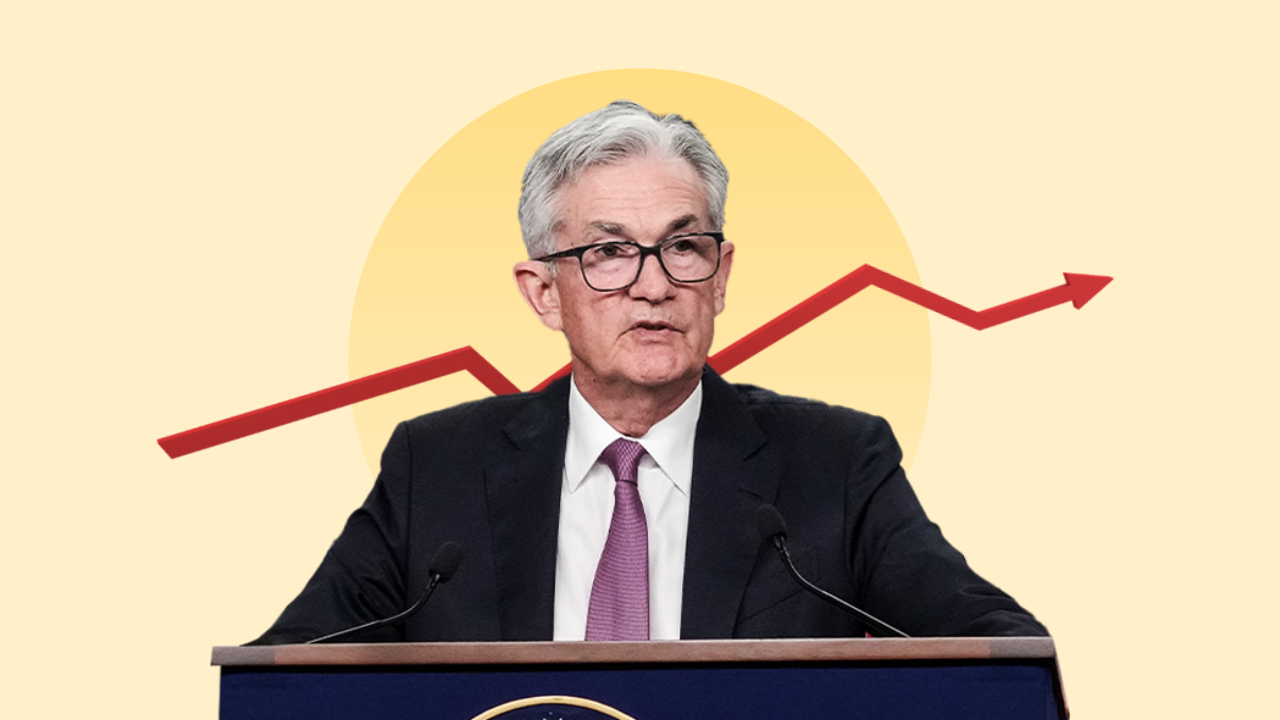
A major factor in the future of interest rates is who will lead the central bank when Fed Chair Jerome Powell’s term expires in May. President Donald Trump has said he plans to elevate someone who wants to cut interest rates even more. Yet, his opportunities to shape that outcome could go beyond appointing the next chief central banker. If Powell chooses to exit the Fed early after his term as chair ends (but before his term as a governor ends), or if the Supreme Court allows Trump to fire Fed Governor Lisa Cook in a pending court case, the president may be in a position to appoint the majority of officials on the Fed’s seven-member board of governors.
But the voting roster is changing in other ways. Several incoming regional Fed presidents have expressed skepticism about cutting rates while inflation remains above target. At the same time, robust economic growth in 2026 could further limit how much room the Fed has to ease.
The most important question at the moment for the Federal Reserve going into 2026 is going to be around what we think the Fed should do versus what the Fed will do.
— Tuan Nguyen, economist at RSM
Fed policymakers have a direct line to your wallet. Their decisions help shape everything from mortgage rates and home equity lines of credit (HELOCs), to personal loans, credit card rates and car loans. They’re also the reason savers have enjoyed historic returns on savings accounts and certificates of deposit (CDs) for four years.
Here’s an inside look at all of the shifting forces that could alter how much the Fed lowers interest rates in 2026.
Bankrate’s 2026 Interest Rate Forecast
Here’s how the Fed could impact key financing and savings rates in the year ahead.
Read more
1. A new FOMC means fresh interest rate voters
By design, the group of officials voting on interest rates is going to look a lot different this year.
The FOMC (Federal Open Market Committee) is made up of 12 officials, five of whom come from the 12 regional reserve banks. The president of the New York Fed gets a vote every year, while four bank presidents rotate on and off the board annually.
This year, Cleveland Fed President Beth Hammack and Dallas Fed President Lorie Logan will get a say in interest rates. In the final months of 2025, both expressed worries about elevated inflation.
At the same time, Philadelphia Fed President Anna Paulson, another new voter this year, has said she sees a path for lower interest rates toward the end of 2026. Meanwhile, Minneapolis Fed President Neel Kashkari has acknowledged risks to both the labor market and inflation.
Taken together, the Fed’s new crop of interest rate voters are made up of four neutral voters, six dovish voters and two hawkish policymakers, according to an analysis from economists at Wells Fargo.
“There’s a very high probability that the new Federal Reserve will be more dovish than it is now, so if that is the case, we should expect rate cuts,” Nguyen says. “But how many times is going to be an important question.”
2. A new Fed chair takes the reins in 2026
Halfway through the year is when the Fed could get a shake up, starting first with the new Fed chair.
Trump said during a Wednesday address in Davos, Switzerland, that he’ll announce his pick “in the not too distant future.” Frontrunners include Fed Governor Christopher Waller and economist Kevin Warsh, who was on the Fed’s board of governors from 2006 to 2011. Trump also interviewed BlackRock Inc. executive Rick Rieder for the job, according to Treasury Secretary Scott Bessent. Previously, National Economic Council Director Kevin Hassett was believed to be Trump’s top candidate, but the president recently suggested an interest in keeping him at the White House.
Candidates aside, the Trump administration has been clear about the top quality that they’re looking for: A desire to lower interest rates.
I want my new Fed Chairman to lower Interest Rates if the Market is doing well, not destroy the Market for no reason whatsoever. Anybody that disagrees with me will never be the Fed Chairman!
— President Donald Trump in a Dec. 23 social media post
“The Trump administration has different goals [than the Fed],” says Derek Tang, economist and co-founder of Monetary Policy Analytics, a Washington, D.C.-based firm led by former Fed governor Lawrence Meyer. “They would rather have the Fed run the economy hot before the midterms and align themselves with the political pals of the White House.”
3. Trump could name up to 3 new Fed appointees
Powell’s term as chair ends in mid-May. Right now, Trump’s only shot at elevating someone who isn’t already at the Fed is by replacing Fed Governor Stephen Miran, whose term expires at the end of January. The Trump appointee, who joined the board in September 2025 to serve the remainder of Fed Governor Adriana Kugler’s term after her resignation, has said he’ll stay on until his replacement is confirmed.
Trump, however, could gain additional opportunities to fill seats on the Fed’s seven-member board if the Supreme Court allows him to remove Fed Governor Lisa Cook — who has been under an ongoing legal investigation over allegations of mortgage fraud — or if Powell chooses to retire before his term as a governor expires.
The Fed chair technically serves two roles: a four-year term leading the central bank and a separate 14-year term as a governor. The latter ends in 2028 for Powell.
“For the good of the independence of the Fed and by extension for the good of the country, Powell should stay on,” says Steven Kamin, senior fellow at the American Enterprise Institute who spent more than three decades at the Fed. “On the other hand, he’s already given so much to the Federal Reserve and to the country.”
Powell staying on as a governor would be a departure from his predecessors. Both Ben Bernanke and Janet Yellen opted to step aside once their replacements were appointed. A Fed chair who already commands authority over Fed officials remaining on the board can complicate communication with markets.
“There’s talk of Powell being a shadow FOMC head,” Kamin adds. “Say the new chair slavishly follows Trump’s policies and urges the committee to vote for excessively low interest rates. The committee bridles at that, and they end up perhaps following Powell’s lead.”
But if Powell and Cook are both out, Trump could end up appointing a total of five of the Fed’s seven governors — an unusual level of control for any president. Fed governors serve staggered 14-year terms specifically to limit political interference. During his first term, Trump appointed Fed Governors Christopher Waller and Michelle Bowman, who is now vice chair for supervision.
Powell has not said whether he will stay on the Fed’s board. But after issuing an unusually blunt defense of the central bank’s independence in a Jan. 11 video statement, some Fed insiders theorize he may remain in his seat as a final backstop keeping the Fed from cutting interest rates as aggressively as the president wants.
“On the one hand, the guy has been there 12 years. He’s 72 years old. He’s done his time. That’s the argument for going,” says David Wessel, director of the Hutchins Center on Fiscal and Monetary Policy. “The argument for staying: This is an existential moment for the Fed in our democracy. He needs to prevent the president from getting a majority on the board.”
4. An uncertain economy could undermine Fed actions
The U.S. economy itself could keep the Fed from cutting rates. Half of economists in Bankrate’s latest Economic Indicator Survey (50%) expect “above-trend” economic growth in 2026. Another 30% say growth will be consistent with recent trends, while 20% say growth will be below trend.
One of those experts is RSM’s Nguyen. He’s grown a bit more optimistic about the state of the U.S. economy over the past 12 months, even downgrading his recession odds from 40% to 30% (the average economist sees 28% odds of a downturn in 2026, according to Bankrate’s latest survey).
Tax cuts and higher tax refunds from the One Big Beautiful Bill Act of 2025 could inject $100 billion into the economy, Nguyen estimates. The downside? It could also bring higher inflation.
He’s currently projecting two rate cuts for 2026, likely arriving later in the year.
“Whenever you have that kind of money being injected into the economy, you’re going to see higher GDP growth, but at the same time higher inflation,” Nguyen says. “For the short run, we think that especially for January and March, the bar for another rate cut is much higher than it was in 2025.”
Nguyen still sees risks. Growth has been increasingly reliant on AI spending. Investments in software and information processing equipment accounted for half of all growth in the first half of 2025, up from 10% in the first half of 2019, according to data from the Department of Commerce.
The booming economy also isn’t creating more jobs, the other side of the Fed’s mandate. The nation’s unemployment rate, currently sitting at 4.4%, is expected to increase to 4.5% by the end of the year, according to economists in Bankrate’s latest survey.
Still, investors also currently see 32% odds of two cuts and a 30% chance of just one cut, according to CME Group’s FedWatch tool.
“The probability is very low at the moment, unless we see any kind of unexpected shock to the economy,” Nguyen says. “The Fed’s job is much more difficult now because it is not obvious which mandate they should focus on. It’s always two sides of the coin.”
5. The Fed is only one piece of the rates puzzle
Lower interest rates juice up the economy, in turn risking more inflation. But elevated price pressures — or fears of higher inflation — could undercut any moves from the Fed.
The Fed directly controls only short-term rates. Longer-term borrowing costs like mortgages, however, are more closely tied to the 10-year Treasury yield, which rises and falls depending on government borrowing as well as expectations for growth and inflation.
Markets have already shown how sensitive that dynamic can be. In recent days, a global bond selloff, geopolitical tensions and fears of an intensifying trade war pushed the 10-year Treasury yield up 10 basis points in less than a week. Mortgage rates followed, rising to 6.25% on Jan. 21 from 6.18% in the prior week, according to Bankrate data.
That means the ultimate factor shaping how much borrowing costs fall in 2026 may come down to more than just the economy or who’s leading the Fed, but whether markets believe the central bank remains committed to bringing inflation down.
“People have to say things to get the job. The question is, do they really mean all these things? Once they get the job and get confirmed, will they drink the water at the Fed and do what’s right for the economy, or will they be checking Trump’s social media to find out what they should do?” Wessel says. “The next Fed chair is going to have a really hard time navigating between Trump demanding loyalty, and the markets and the public demanding independence.”
Why we ask for feedback
Your feedback helps us improve our content and services. It takes less than a minute to
complete.
Your responses are anonymous and will only be used for improving our website.
Help us improve our content
Read the full article here